
03, 04, 05, 06, 07, 09 Chemical Warfare
Fotogalerie
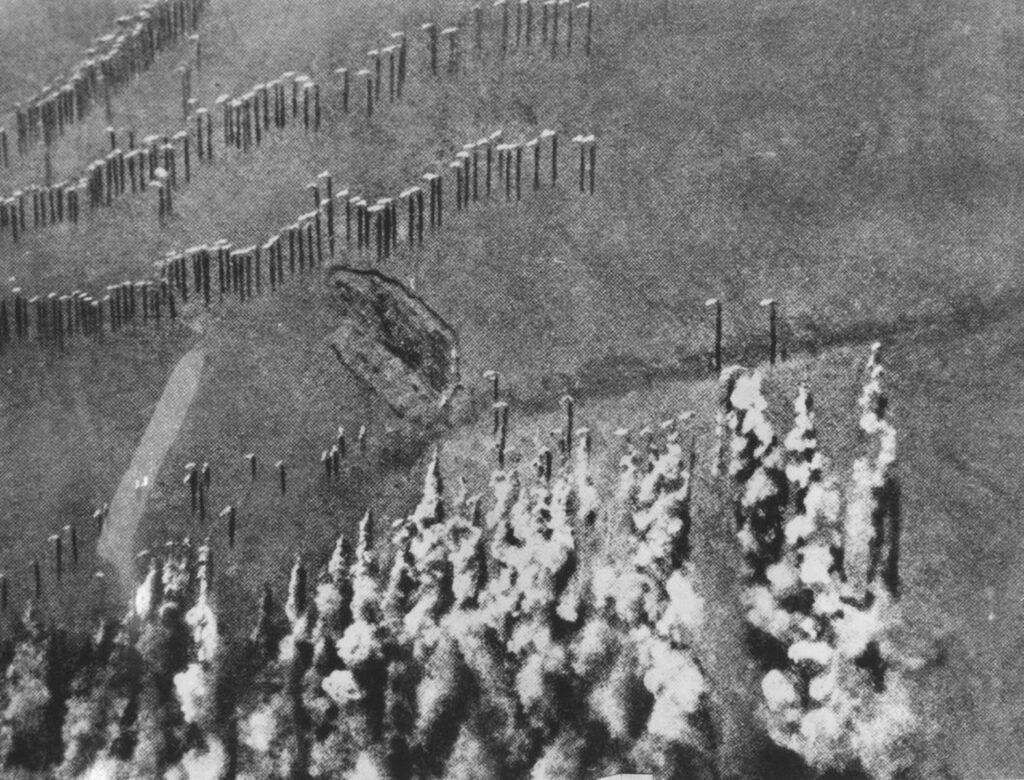
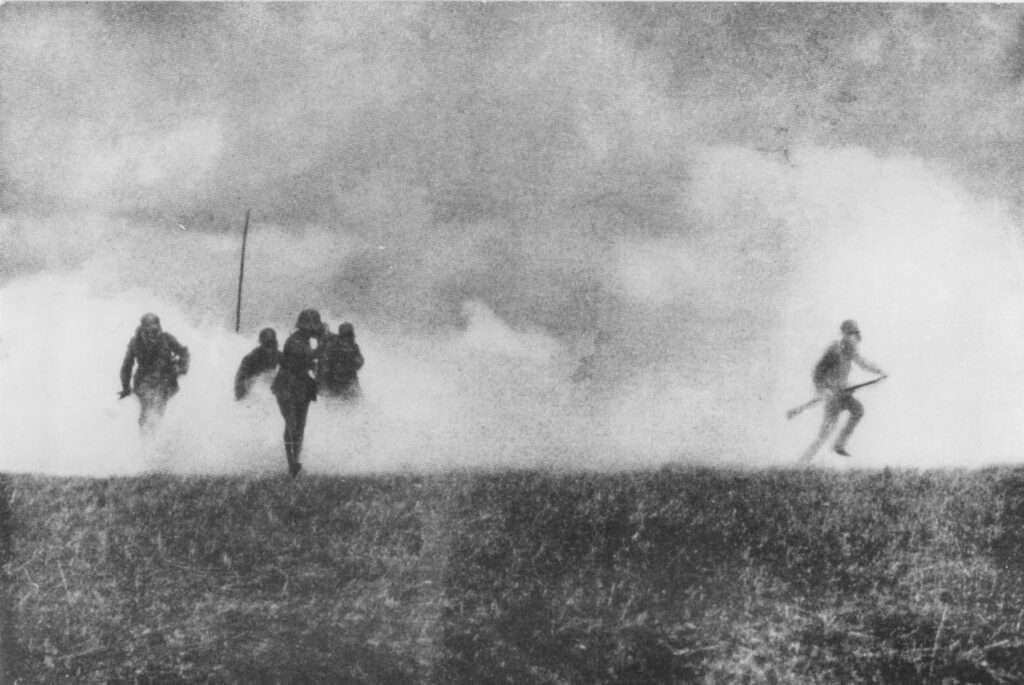
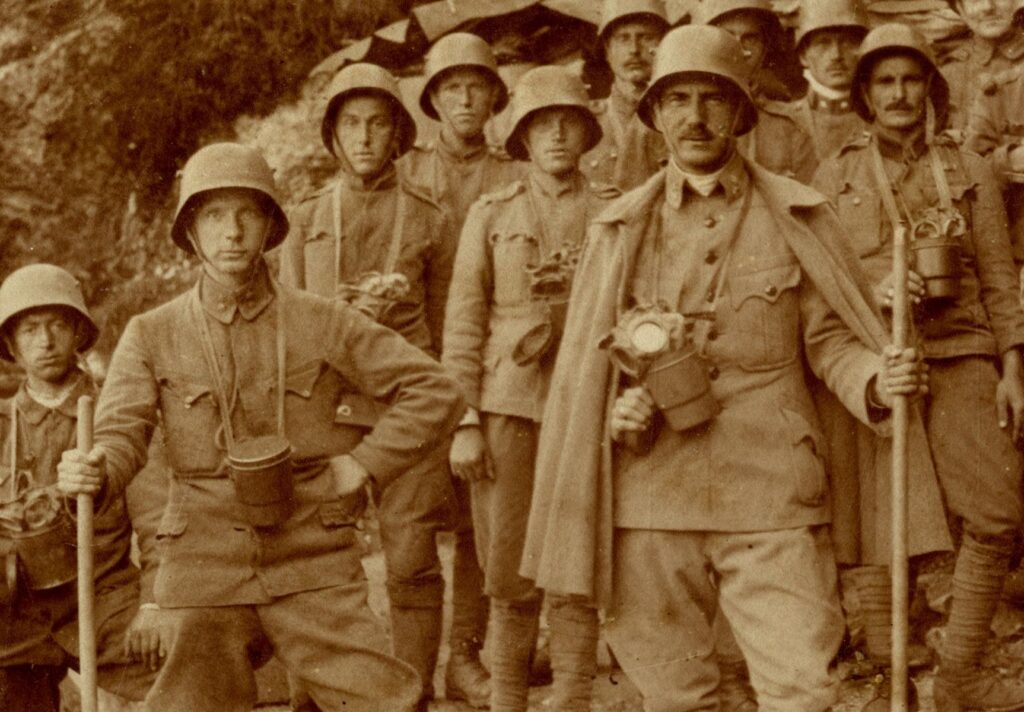
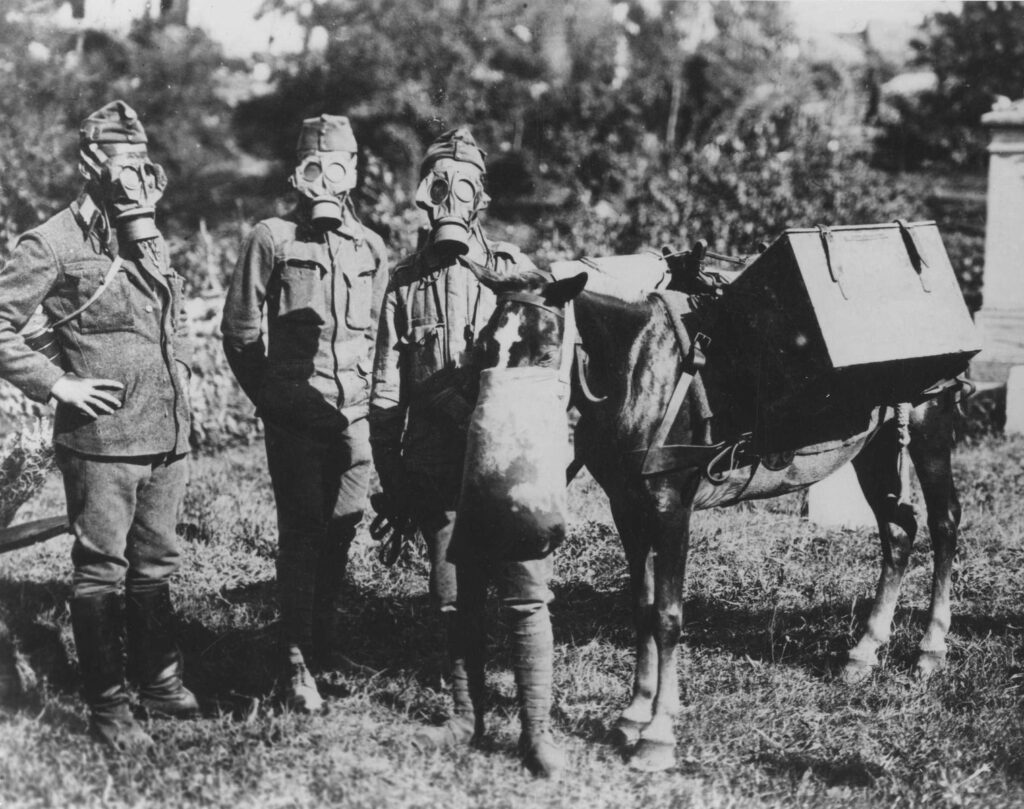
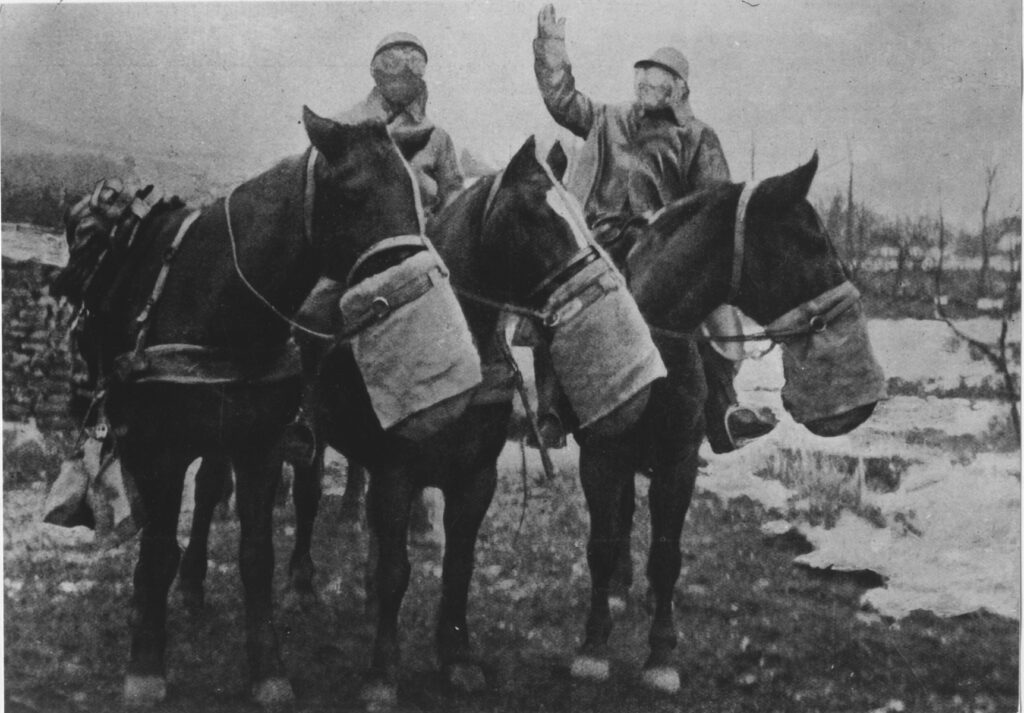
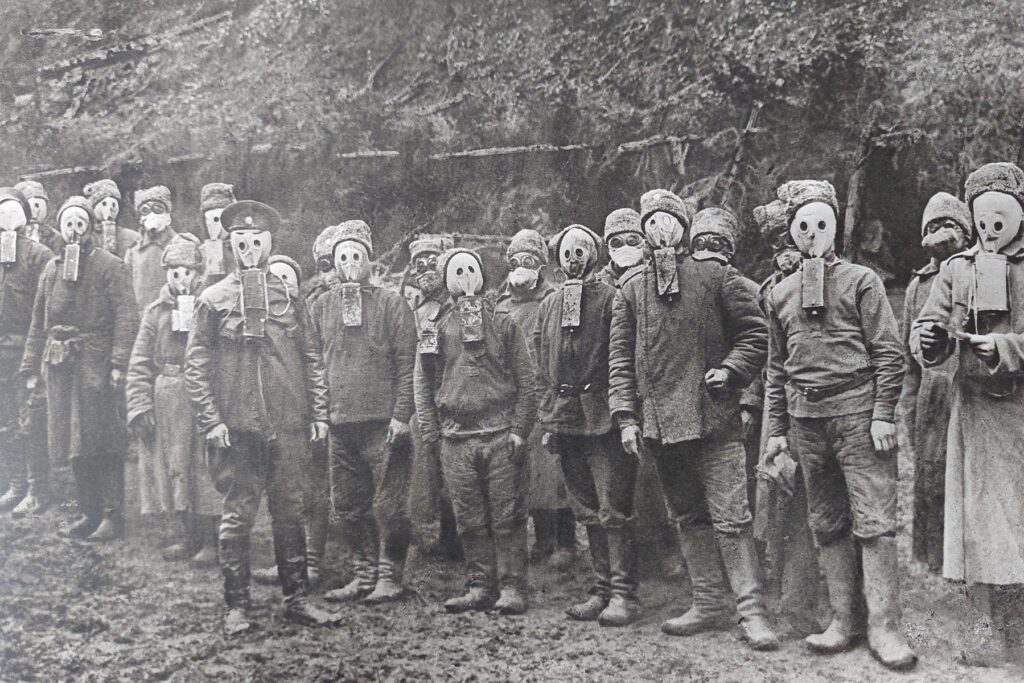
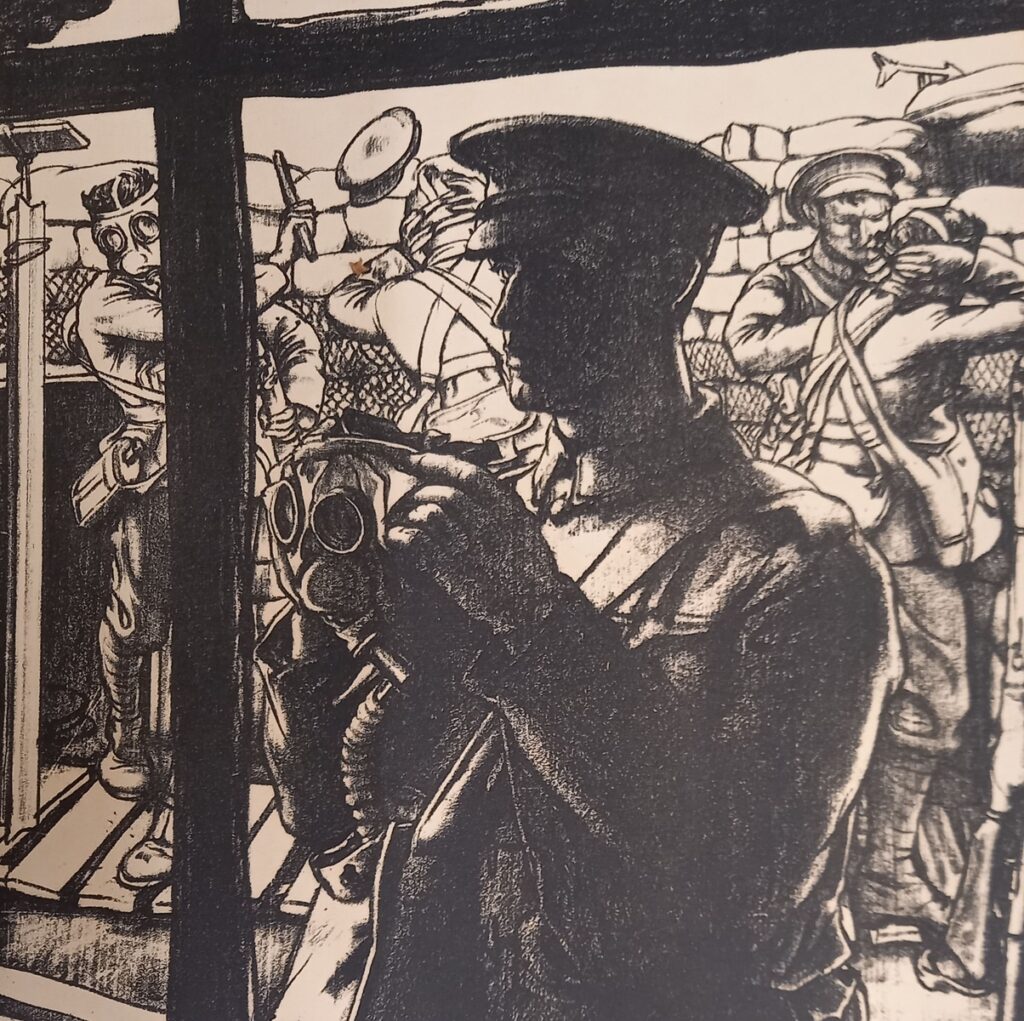
On 22 April 1915, the Germans released 180 tonnes of chlorine from steel bottles along a 6-kilometre long section of the battlefront not far from the Belgian town of Ypres. On that day, modern chemical war was born. The use of chemical weapons was supposed to be one of the ways to surprise the enemy and turn the course of the war. Besides cloud-gas attacks when the gas was released towards enemy trenches under favourable weather conditions, warfare agents were mostly used in the form of chemical artillery ammunition. In February 1916, near Verdun, the French army put into use new artillery shells filled with a mixture of phosgene. The use of chemical ammunition during the war kept increasing. In July 1917, the Germans used bis(2-chloroethyl) sulphide for the first time near the town of Ypres; the gas is known as sulphur mustard today.
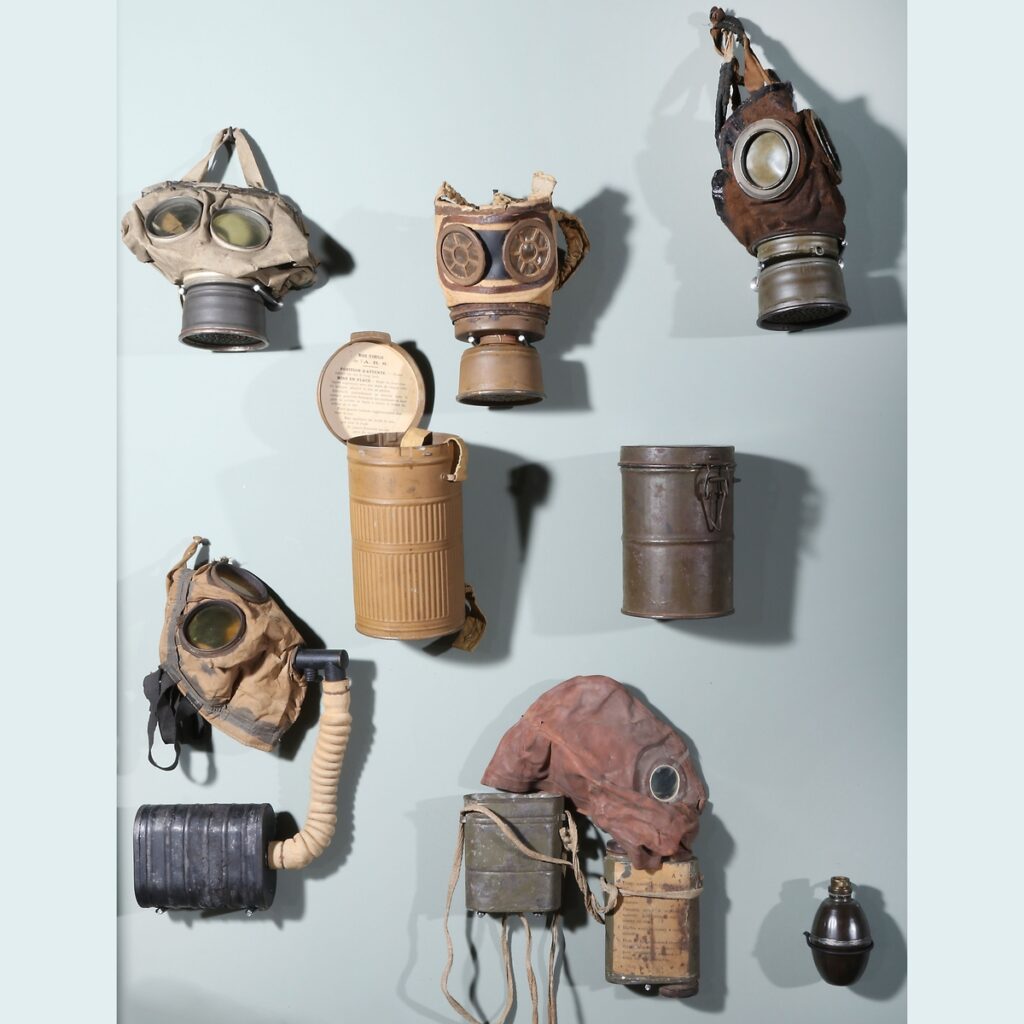
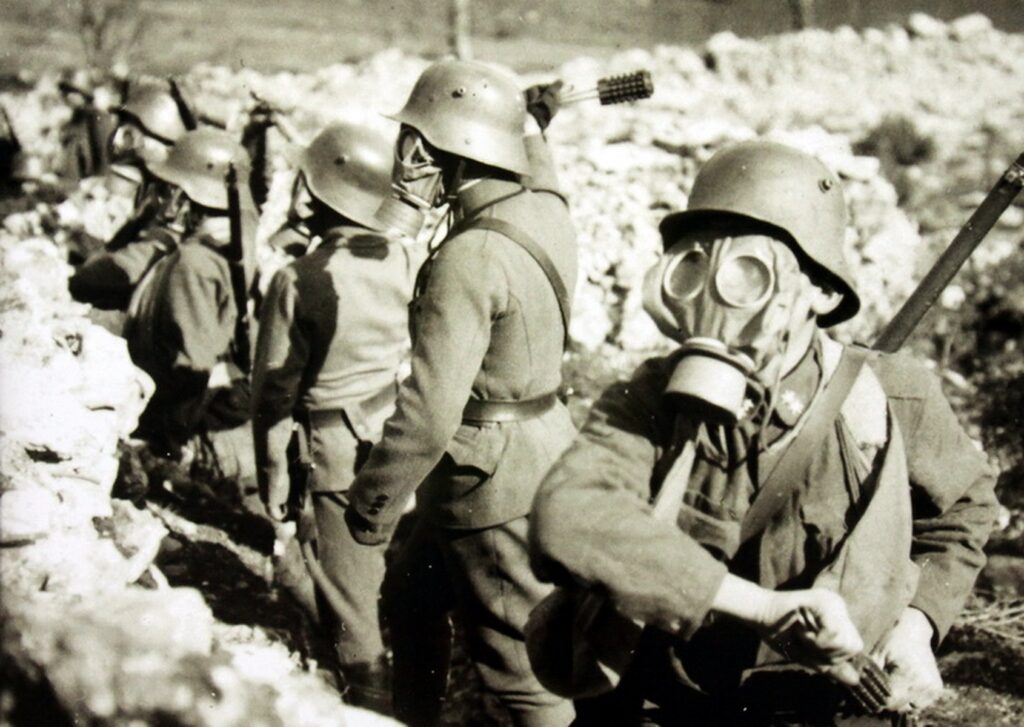
The first chemical attacks resulted in the necessity to develop protective equipment against them for soldiers. First temporary protection aids, scarfs and bandages soaked in a deactivation agent appeared. In the next stage, masksimpregnated with neutralizing agents were developed. As early as in autumn 1915, German chemists designed the first type of modern gas masks with a filter. This was soon followed by protective equipment for horses and dogs, and even messenger pigeons.
Chemical war is associated with another new weapon that appeared during World War I: the flamethrower. It was first used by the German army. Although flamethrowers differed in size and type of flammable substance, they all worked on the same principle when the flammable substance was forced out of a container by gas pressure and subsequently ignited.
03 German Gas Mask 1915 Model, Rahmenmaske, c. 1916
04 Austro-Hungarian Gas Mask, Ledermaske, 1918
05 French Gas Mask ARS, 1917
06 British Gas Mask Small Box Respirator, c. 1918
07 Russian Gas Mask of Mining Institute, 1917
Aktuálně
Vojenský historický ústav Praha získal unikátní vlajku z roku 1918
Ministr obrany Jaromír Zůna se zúčastnil konference AOBP a prohlédl si Armádní muzeum Žižkov
Dnes je Mezinárodní den památky obětí holocaustu, připomíná 81 let od osvobození koncentračního tábora v Osvětimi
V Armádním muzeu Žižkov začala programová konference České obce sokolské
Pracovník VHÚ Praha Jiří Rajlich oceněn za celoživotní přínos letectvu a Armádě ČR




Vojenský historický ústav Praha
U Památníku 2, 130 05, Praha 3
muzeum@vhu.cz
Ředitelství
Ředitel VHÚ Praha
brigádní generál Mgr. Aleš Knížek
Sekretariát ředitele
+420 973 204 900
ID DS
hjyaavk
Správní rada pro vyřízení vývozních povolení, darů či výkupů
+420 973 204 903
Správní rada pro vyřízení zápůjček
+420 973 204 900
Veškeré informace týkající se zápůjček exponátů na výstavy a další akce, formuláře pro vývoz milirarií, práva k fotografiím a filmovým sbírkám atd. naleznete v samostatné rubrice Služby veřejnosti.
Knihovna VHÚ
Pracoviště Rooseveltova
+420 973 215 544
Vedoucí knihovny VHÚ
+420 973 215 938
knihovna@vhu.cz
Časopis Historie a vojenství
Šéfredaktor
David Pazdera
+420 973 204 941
Armádní muzeum Žižkov
U Památníku 2
Praha 3 - Žižkov
+420 973 204 924
Letecké muzeum Kbely
Mladoboleslavská ul.
Praha 9 - Kbely
+420 973 207 500
Vojenské Technické Muzeum Lešany u Týnce nad Sázavou
Lešany u Týnce nad Sázavou
pošta Krhanice, 257 42
+420 973 296 161